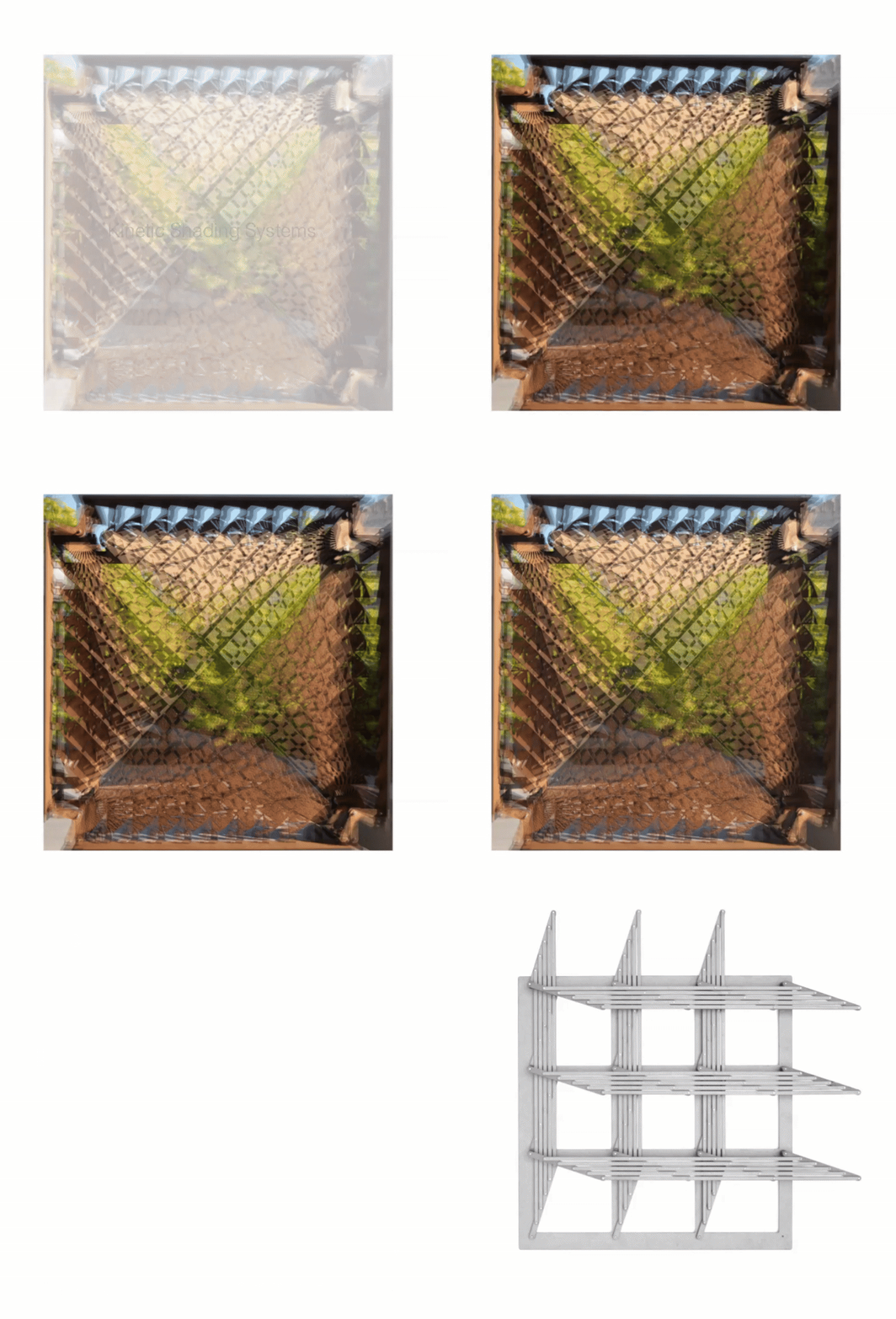
Kinetic Shading Structure
2010-2016 | Virginia Tech
Collaborators: Borhani
Project Description: In the field of sustainable architecture, transformability is an important way of actively responding to ambient conditions while also meeting the needs of occupants and addressing issues of building performance. This research contributed knowledge for architects about the potential of kinetics for the shading system to respond effectively to changes in its environment. Within contemporary architecture, there is a growing interest in motion; buildings and their parts are gradually shifting from static to dynamic. However, contemporary activities in architecture are evidence of a lack of a holistic approach to the design of motion in architecture, and the design of motion as an alternative mode of design thinking is still in its infancy.
This research was a step in the direction of better understanding the key knowledge exchanges within the design process of Transformable Shading Systems (TSS). It pursued to investigate, explore, and propose how the concept of transformability in designing shading systems could be suggested, depicted, or physically incorporated in building envelopes.
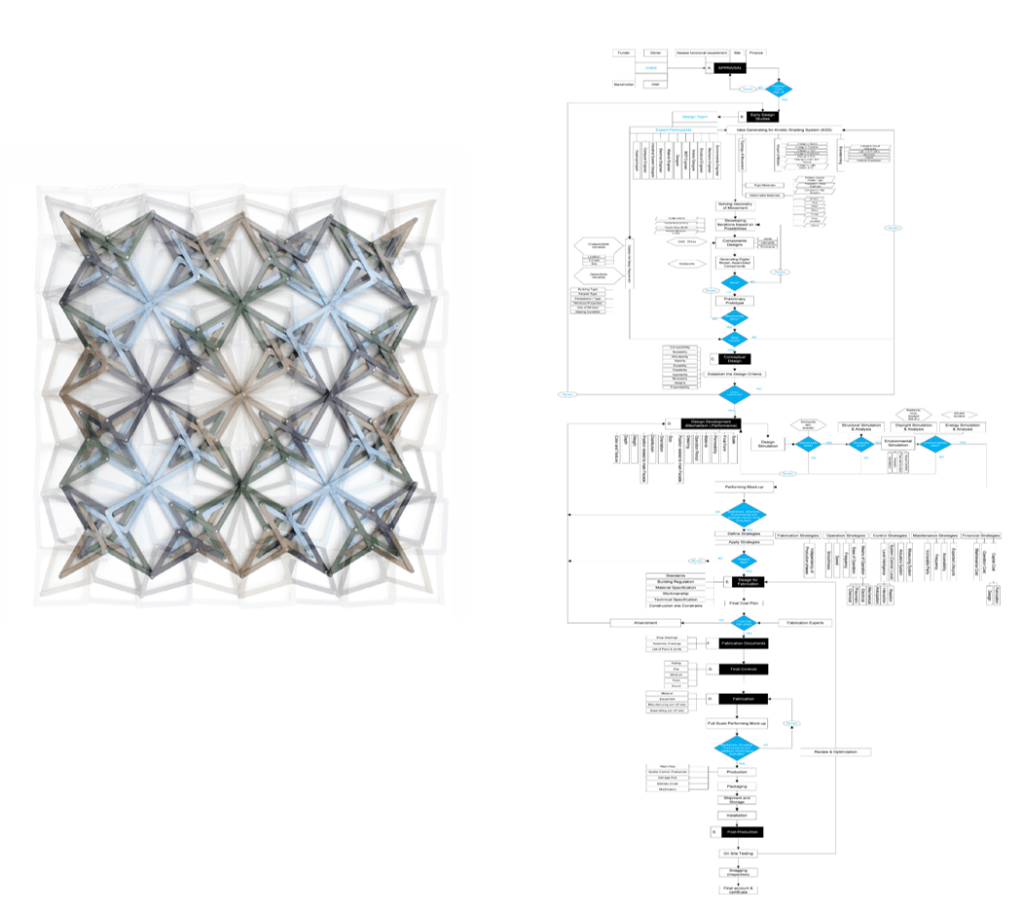
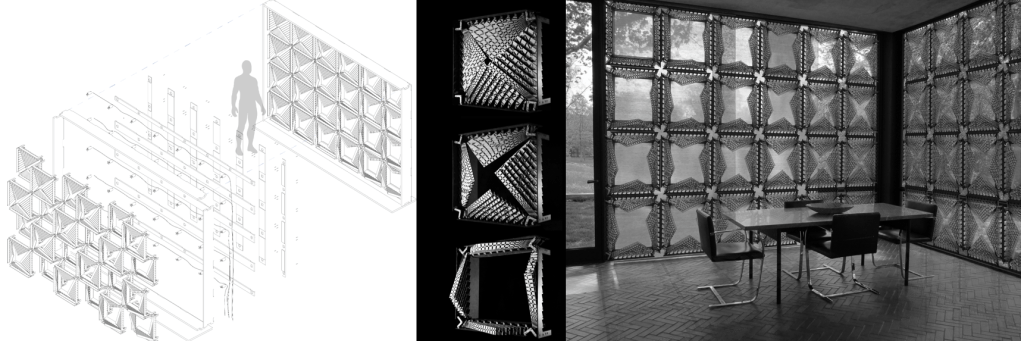
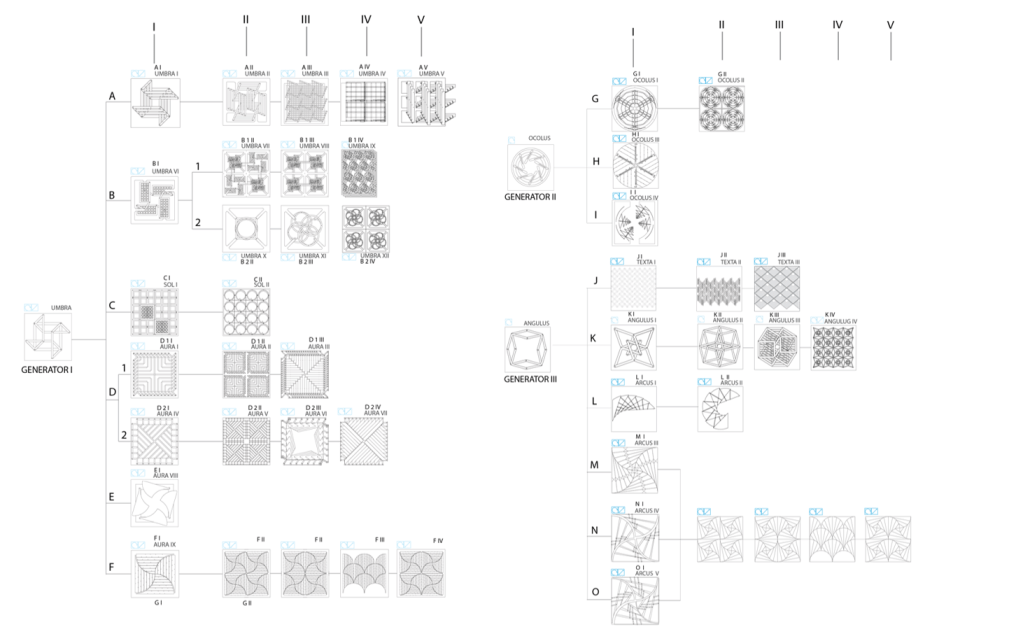
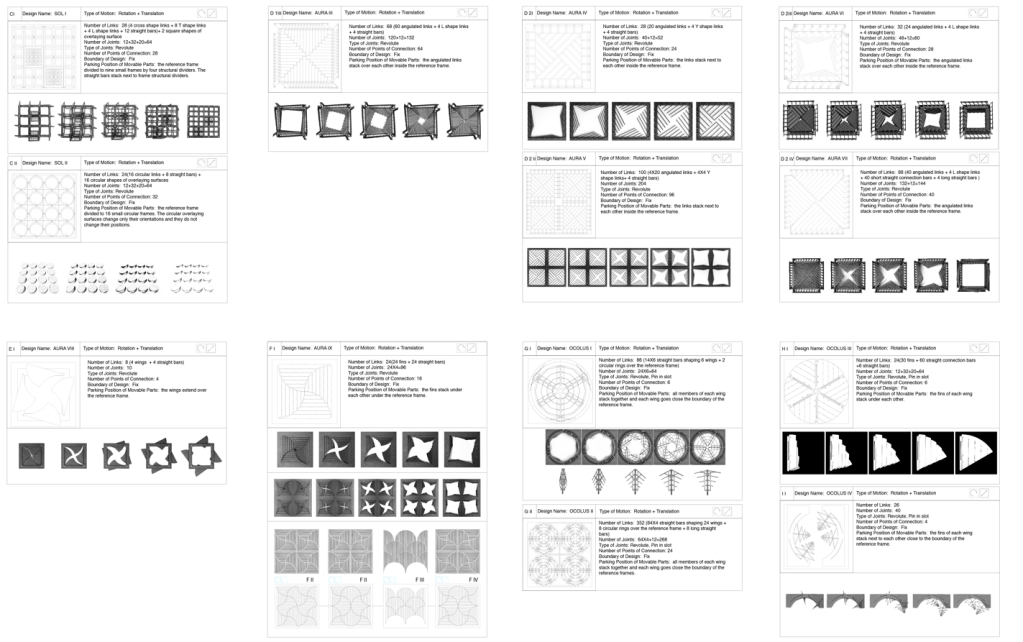
In order to get the full potential of the design process of transformable shading systems, this study presented a design workflow of a specific case, called AURA, that helped to create openings for establishing a proper design methodology of TSS. While the workflow was concerned with identifying the key decision nodes, in depth design development of AURA determined critical parameters addressing transformation itself as a design parameter of transformable shading devices.
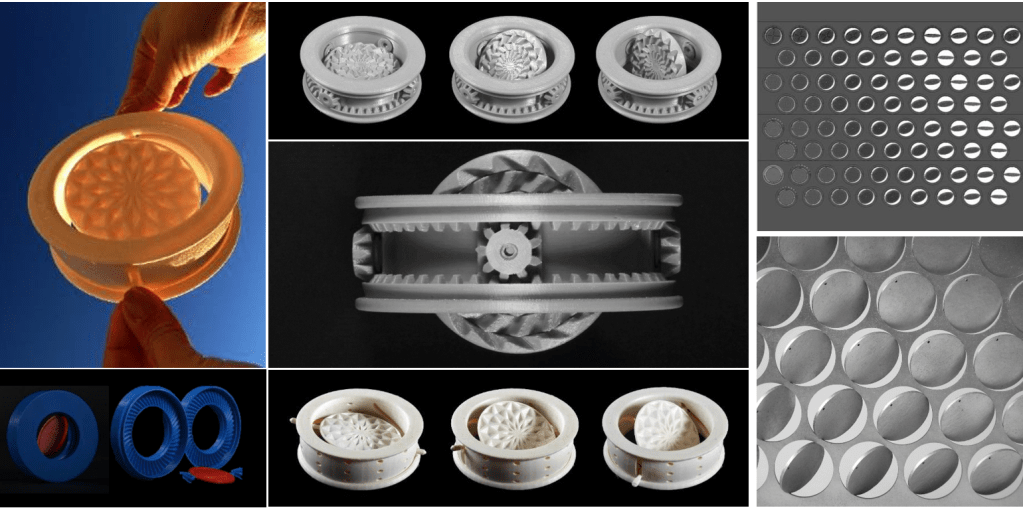
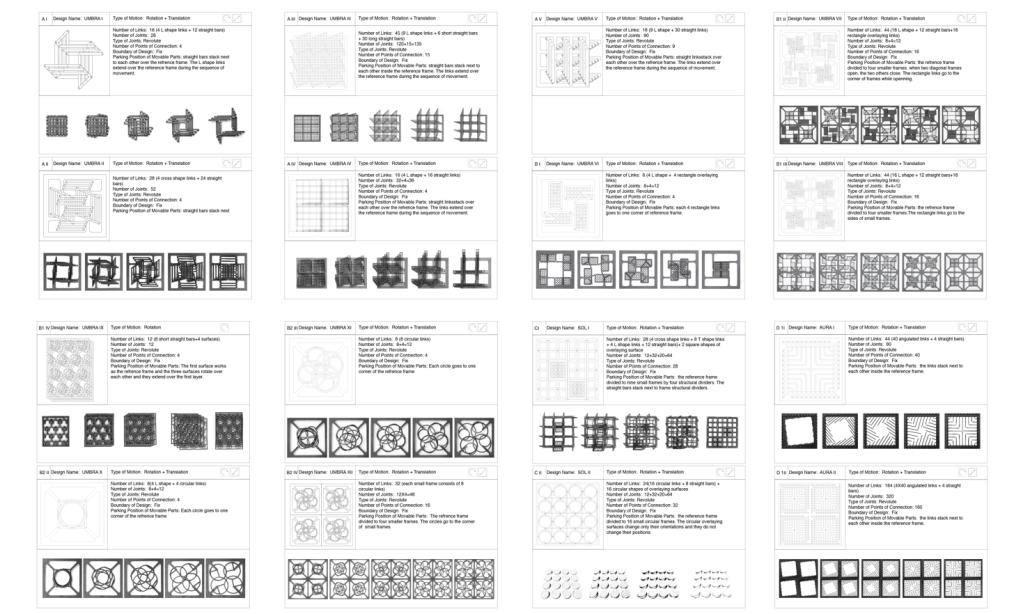
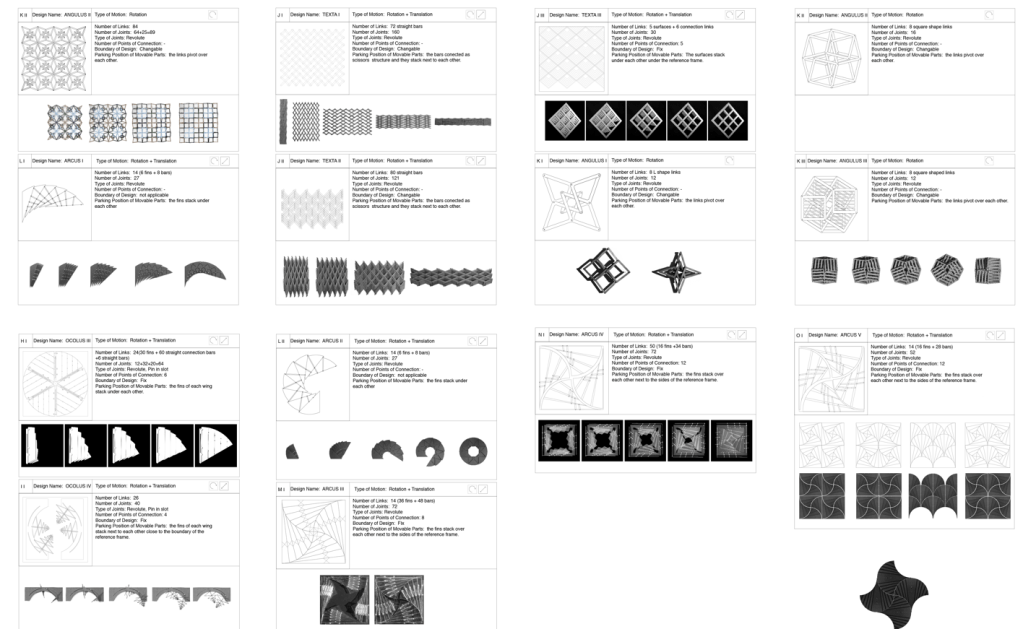
With a focus on the importance of AURA’s design process, this research documented a sequential design development of different mechanisms from a seed idea through the fabrication phase in which motion evolved into physical models.

 NEGAR KALANTAR