Tunable Smart Materials
Wood and Shape memory Polymer
Funding| NSF EAGER #1548243 : Interaction of Smart Materials for Transparent, Self-regulating Building Skins
2019-2022: Texas A&M, College Station
Collaborators: Collaborators: Maryam Mansoori (PhD researcher), Rybkowski, Creasy
Links to publications: Material Driven Adaptive Design Model for Environmentally-Responsive Envelopes
Adaptive Wooden Architecture. Designing a Wood Composite with Shape-Memory Behavior
The design and fabrication of transformable, doubly-curved surfaces using shape memory composites
Toward Adaptive Architectural Skins
Video: NSF Featured
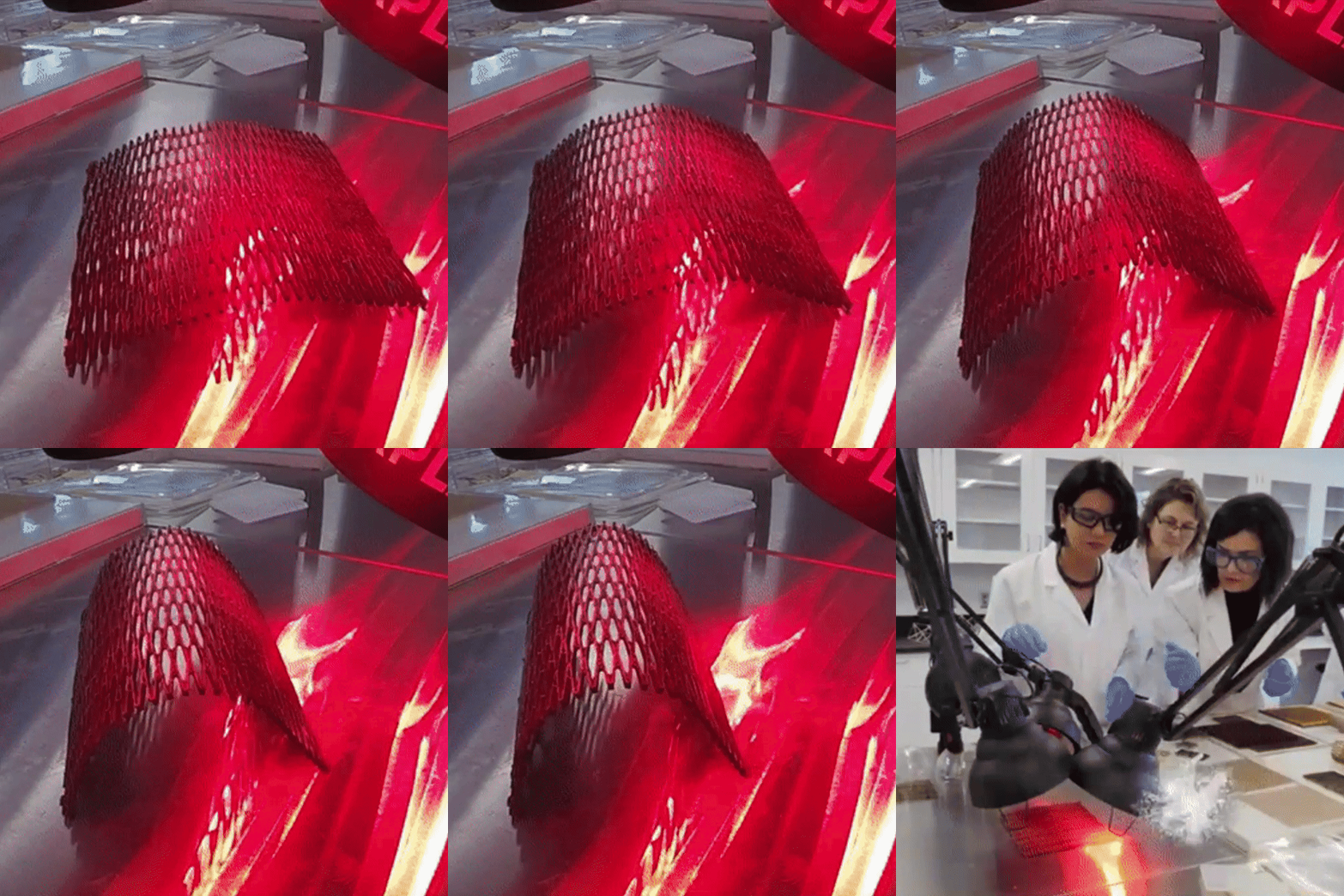
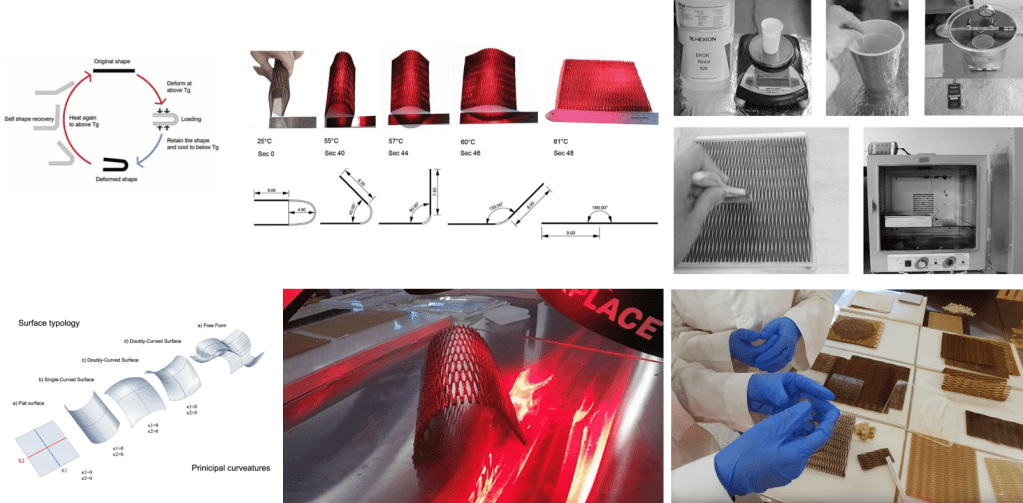
This research explored creating adaptable curvilinear surfaces by deforming flat wooden surfaces using a composite material. A prototype system was developed, combining kerfed wood for structural stability and a shape-memory polymer for responsiveness. The composite deforms predictably into a curvilinear shape when heated to 40-60°C and returns to its flat state when cooled. This approach reimagines wood, a sustainable architectural material, for adaptive digital designs. The project demonstrates kinetic behavior in wood-based composites, offering a practical, cost-effective method for designers to create flexible fabrication and packaging strategies while maintaining environmental and aesthetic value.
 NEGAR KALANTAR